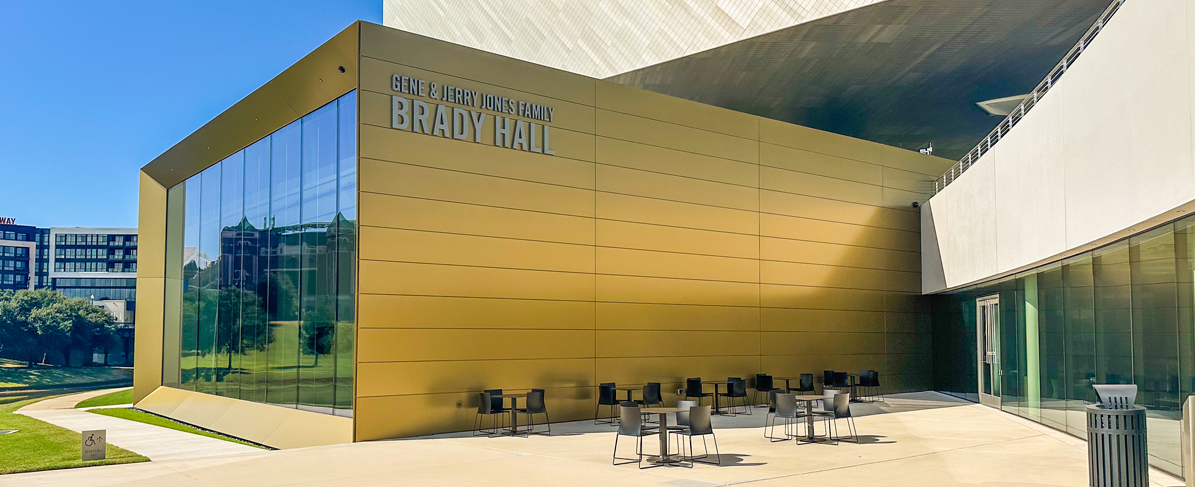
Look at any urban skyline and you’ll see the reflection from numerous metallic facades. Metal buildings and the appearance of metal exteriors are highly sought after for sleek, modern aesthetics. But there are numerous ways to achieve this look depending upon the project’s budget, weight capacity and design goals. In this blog, we’ll discuss the differences between exterior metal wall panels (including MCM and ACM panels) and Exterior Insulation and Finish Systems (EIFS) with metallic finishes and when you might pick one over the other.
First, let’s clarify these different building technologies.
MCM (Metal Composite Material) and ACM (Aluminum Composite Material) panels are layers of metal bonded to a core material that are prefabricated and delivered to the jobsite when ready for installation. They are highly durable, customizable and are frequently seen on high-rise buildings and retail spaces. Dryvit’s Metalite 8000 is a great example of an ACM panel that is low-maintenance and can be custom fabricated and engineered to match virtually any design.
An EIFS façade is a multi-layered wall system that includes insulation, a base coat and an acrylic finish coat. They can be panelized in a factory or field installed and have infinite color and texture options, including the look of metal, like Dryvit’s ReflectIt. EIFS are commonly used across both new construction and restoration of commercial and residential buildings.
 Aesthetic Differences
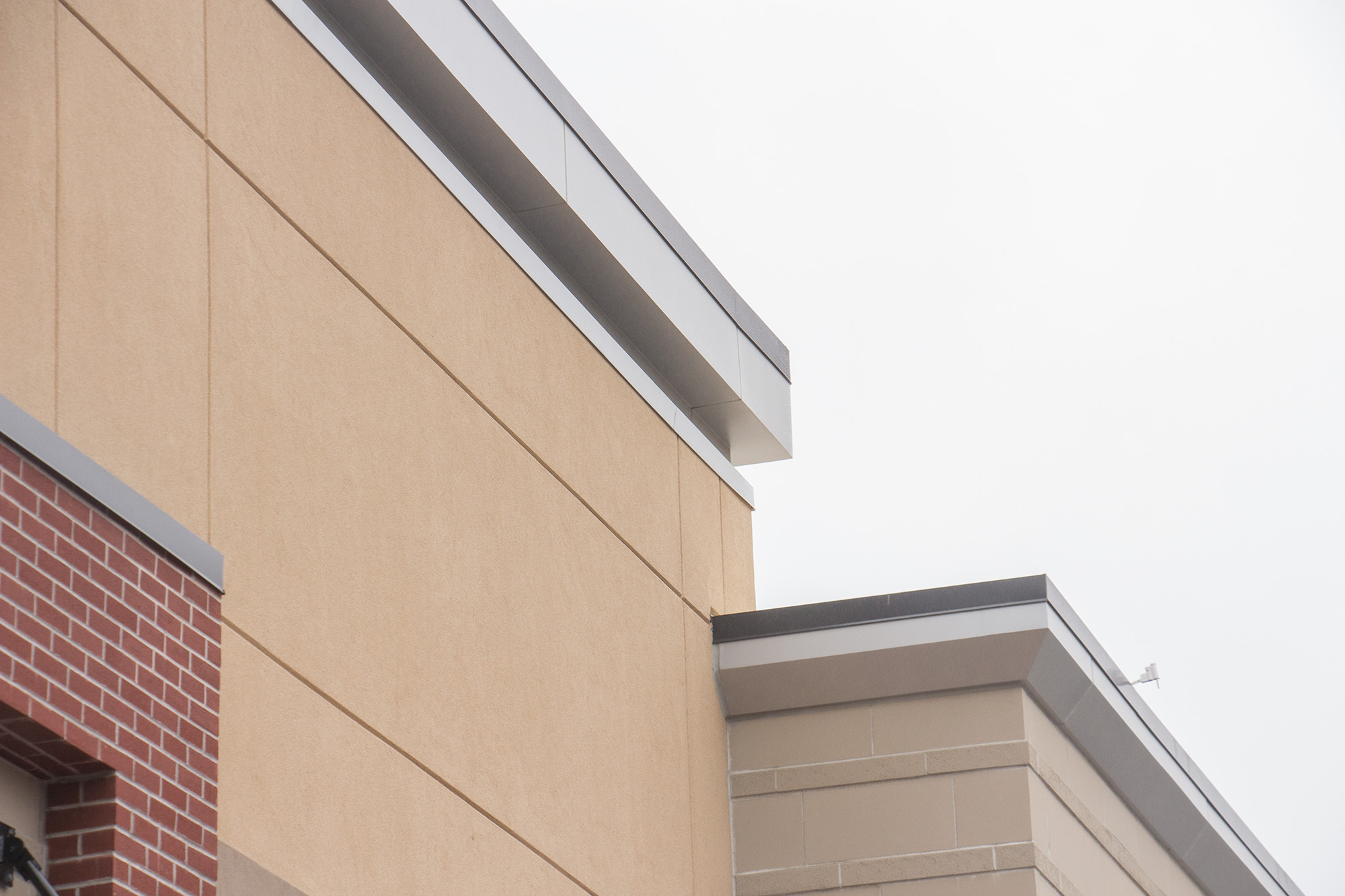
Can you tell the difference between real metal and metallic EIFS just by looking at them? It depends on both distance and the craftsmanship of the application. Plus, depending on where you want this metallic look on your building, realism may be more or less of a concern. From far away, such as at the roof to wall connection, the differences are nearly indistinguishable. The image shown is a great example, where Dryvit's ReflectIt finish was used to simulate metal panels on the Monon Crossing shopping complex.
Metal wall panels deliver the real thing: authentic smooth metal with reflectivity and sharp clean lines. EIFS with metallic finishes simulates that metal look through skilled application of specialized reflective coatings. That said, achieving a convincing metallic appearance is reliant upon on the talent and experience of the trades applying it, so a simulated finish may lack the depth and reflectivity of true metal. And if applied directly in the field, as opposed to the finishes being installed to wall panels in a factory setting, the work needs pristine weather conditions to cure and finish correctly, which can introduce scheduling conflicts in less predictable climates.
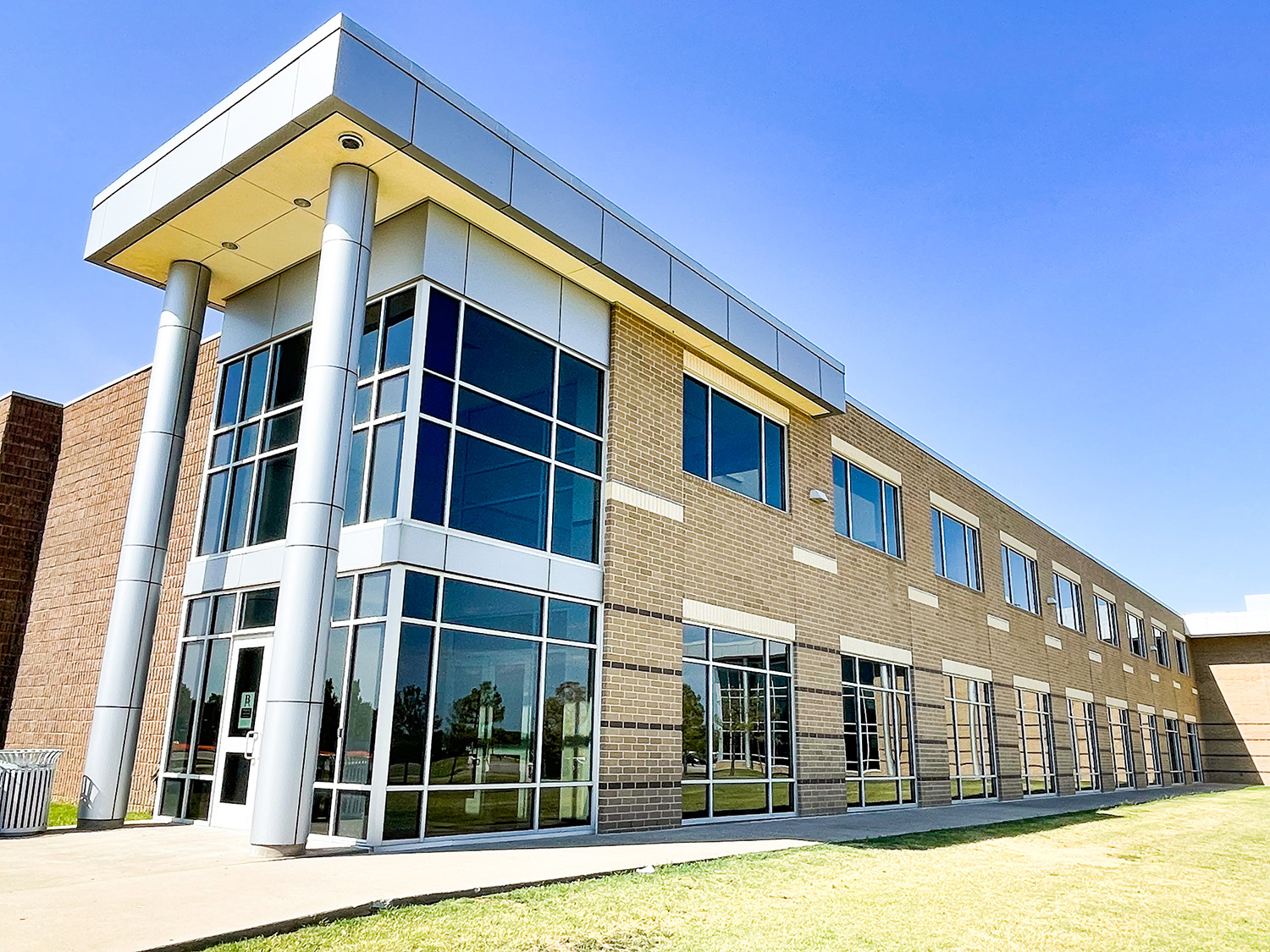
In terms of durability, real metal is often presumed to be the winner, but that isn’t always the case. Both metal panels and EIFS offer high resistance to weather and UV exposure, paired with a long lifespan and minimal maintenance. For high-traffic areas, metal panels may help to mitigate impact damage, but acrylic finishes can withstand this risk with added reinforcement in their base coat.
If you’re looking for performance in terms of energy efficiency, EIFS holds a clear advantage thanks to its built-in continuous insulation layer. For projects chasing aggressive energy targets, that integrated insulation is a big benefit for thermal performance.
MCM panels do not inherently provide thermal insulation. They can absolutely be paired with external insulation to achieve sustainability goals, but that thermal layer becomes a separate part of the assembly rather than a built-in feature.
Navigating weight on the building façade is a big factor for architects and is where EIFS with metallic finishes shine. EIFS are a lightweight wall system and are sought after when the weight of metal panels is not structurally feasible. This flexibility enables these metallic finishes to be used on nearly any building type and at any height. And because these coatings are fluid-applied, they can be installed in virtually any configuration or curvature.
While metal panels are traditionally presented in rectangular shapes, some manufacturers can provide curved and 3D MCM panels to enhance the building’s design. Both metal panels and EIFS with metallic coatings are available in different colors and sheens to achieve your desired look, but these options will vary by manufacturer.
 Final Determination
So which system is the best fit for your project? You first need to evaluate your primary goals and potential building restrictions.
If your building can withstand the weight and you’re seeking the protection and look of true metal with longer finish warranties, metal wall panels may be your best option. Lean toward EIFS with metallic finishes when budget is a driving factor or when low structural weight is a priority. The built-in insulation makes it a smart choice for easy energy efficiency too.
Both wall systems can achieve that coveted metallic look. The right choice comes down to balancing your client's aesthetic vision, performance expectations and budget. With proper installation of either system, you can’t go wrong and will have a metallic façade with lasting performance.