Frequently Asked Questions about EIFS
If you are new to EIFS wall cladding, check out these 10 EIFS FAQs to help you get caught up on this sustainable building façade solution.


If you are new to EIFS wall cladding, check out these 10 EIFS FAQs to help you get caught up on this sustainable building façade solution.
If you're new to EIFS wall cladding, check out these 10 frequently asked questions to help you get caught up on this sustainable building façade solution.
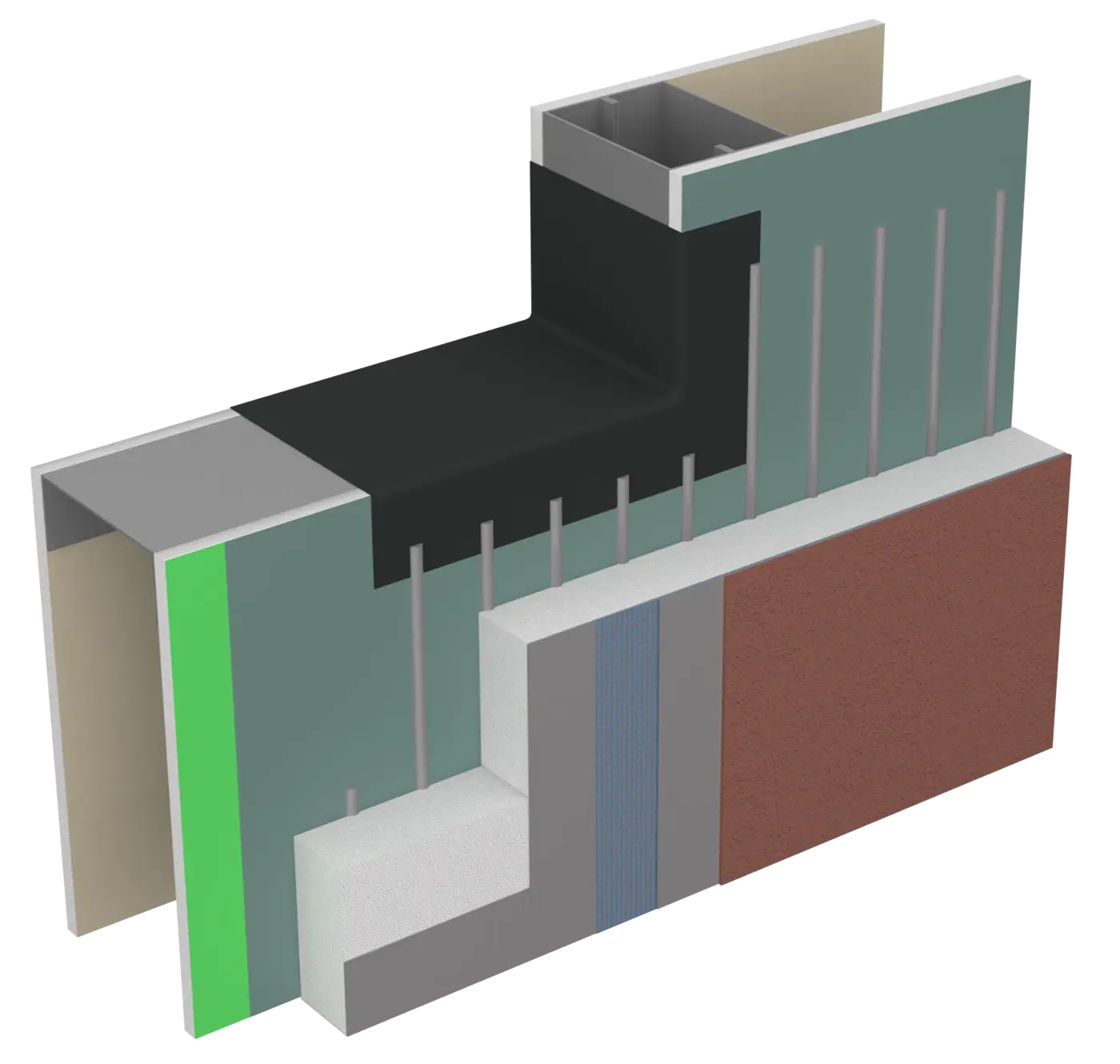 1. What is EIFS cladding? What are the components of an EIFS system?
EIFS, or exterior insulation and finish system, is an insulative, multi-layered exterior wall cladding used in residential and commercial construction that can be applied entirely in the field or prefabricated in wall panels and then installed on the building. Note that it is sometimes also referred to as EFIS (pronounced “EEF-IS”).
At a minimum, EIFS cladding consists of 1. continuous insulation (CI) made from Expanded Polystyrene (EPS), Extruded Polystyrene (XPS), Graphite Polystyrene (GPS) or Mineral Wool, 2. a basecoat with reinforcing mesh and 3. a durable architectural finish for the façade, available in limitless color and texture options. These exterior finishes can mimic the look of other types of cladding materials, such as stucco, wood, metal, stone panels or granite, at a fraction of the weight to minimize the building load. EIFS wall systems with additional layers for drainage and moisture management are also available.
Barrier EIFS or non-drainable EIFS, such as Dryvit Outsulation®, is adhesively or mechanically attached to a substrate and has a single line of weatherproofing properties. The base coat within a barrier EIFS assembly serves as the weather barrier layer for the cladding, relying on termination sealant joints and flashings to prevent water penetration.
Drainable EIFS, also known as moisture managed EIFS or water managed EIFS, include an air and water resistive barrier (AWRB) behind the insulation panel as a means of draining incidental moisture away from the wall system. Outsulation® Plus MD, for example, utilizes grooves placed behind the insulation board for additional moisture management. Managing water in its liquid and vapor forms through the building façade helps to maintain a comfortable interior environment, reduce energy consumption and protect the structure from mold and other damage.
A barrier wall cladding is an exterior wall that is designed to shed water on the outside face of the cladding. Non-drainable EIFS, tilt-up-concrete and CMU or masonry block walls are good examples of barrier walls.
Dryvit recommends the use of water resistive barriers over moisture sensitive substrates to provide supplemental protection in the event of a component failure. Local building codes and project specifications should stipulate whether this is a requirement or not.
 5. In using EIFS, is the need for vapor barrier eliminated?
No. Although EIFS will minimize internal wall condensation by reducing air infiltration, climates that normally would use vapor retarders should still use them with EIFS claddings. When requested, Dryvit can perform a Water Vapor Transmission Analysis for project-specific walls to evaluate their condensation potential.
Insulated cladding construction, like EIFS and panelized CI systems, significantly reduce thermal bridging in commercial buildings by providing a continuous layer of insulation that minimizes heat transfer through structural framing elements, like wood studs or steel beams. This uninterrupted insulation helps buildings meet energy codes, maintain consistent interior temperatures, improve energy efficiency and reduce heating and cooling costs. Additionally, EIFS cladding enhances the building’s overall health and performance by mitigating condensation risks within the wall assembly
Generally, the minimum thickness of EPS foam insulation for Dryvit EIFS is 1 in. Locally, where clearance may be an issue (for example, window and door returns), a ¾ in. thickness is acceptable. Since this thickness limits rasping, it is not recommended to be used over full wall areas. Also, some EIF systems, such as Outsulation® MD, have internal tracks and grooves and will require a minimum 2 in. EPS.
Historically, the thickness of EPS foam insulation was limited to a maximum of 4 in. although some systems today can allow for up to 13 in. with tested code compliance.
 9. What is the difference between EPS, XPS, GPS and Mineral Wool insulation?
Expanded Polystyrene (EPS), Extruded Polystyrene (XPS), Graphite Polystyrene (GPS) and mineral wool are all insulation board options used in EIFS cladding, but they differ in composition and performance.
EPS foam is the most common insulation for EIFS, because it is lightweight, cost-effective, and provides highly effective thermal performance. XPS insulation offers a higher compressive strength than EPS and is typically more expensive. GPS insulation incorporates graphite particles that reflect radiant heat, enhancing its thermal performance without increasing thickness. Mineral wool insulation, while still highly insulative, is also non-combustible and provides excellent fire resistance, making it ideal for projects with stringent fire safety requirements.
Yes! Installing high-performance EIFS to a new or existing building envelope is a highly effective sustainable design strategy to help achieve LEED certification, Passive House standards, net-zero energy, net-zero ready or zero energy status, as well as Deep Energy Retrofits and other similar programs.