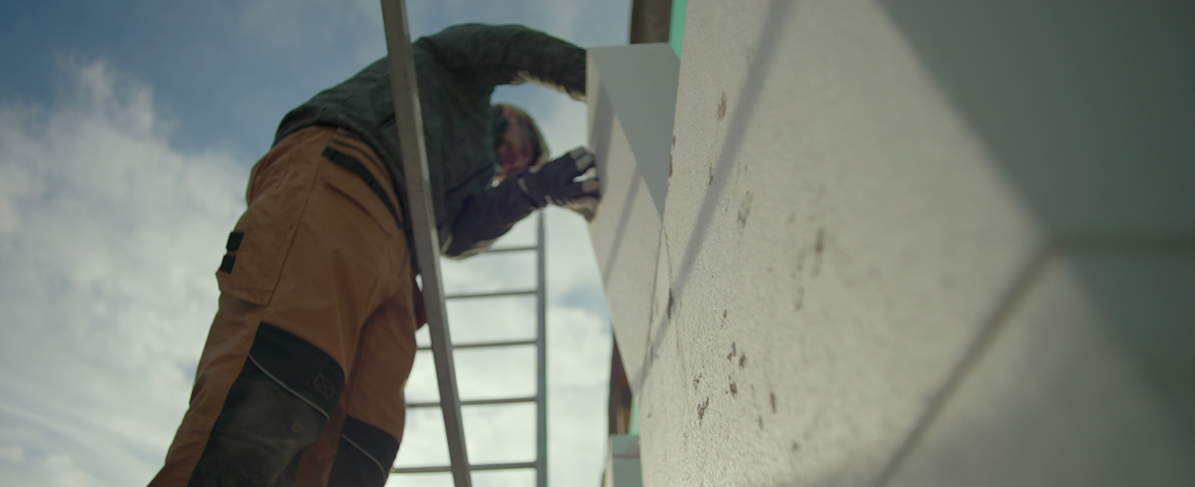
Continuous insulation (CI) is recognized as one of the most effective methods for meeting energy code requirements in both new construction and retrofit applications. When integrated into an EIFS assembly such as Dryvit's Outsulation systems, CI also serves as the insulating substrate for the finish system, combining thermal performance with cladding in a single assembly.
But not every type of insulation material will perform the same for every project, so specifying the correct CI material for your exterior wall assembly is not an inconsequential decision. EPS, GPS, XPS and mineral wool each serve as viable exterior continuous insulation materials, but they differ in R-value per inch, moisture performance, fire resistance and cost. The right choice for your building depends on climate zone, code requirements, project budget and more.
Continuous Insulation Options
The four materials most frequently specified for exterior CI are expanded polystyrene (EPS), graphite polystyrene (GPS), extruded polystyrene (XPS) and mineral wool. Each performs differently under real-world conditions and carries a trade-off in thermal efficiency, moisture management, fire behavior, sustainability or cost.
This post breaks down how each material performs across the criteria that matter most to architects making specification decisions.
 EPS (Expanded Polystyrene): Cost-Effective and Versatile
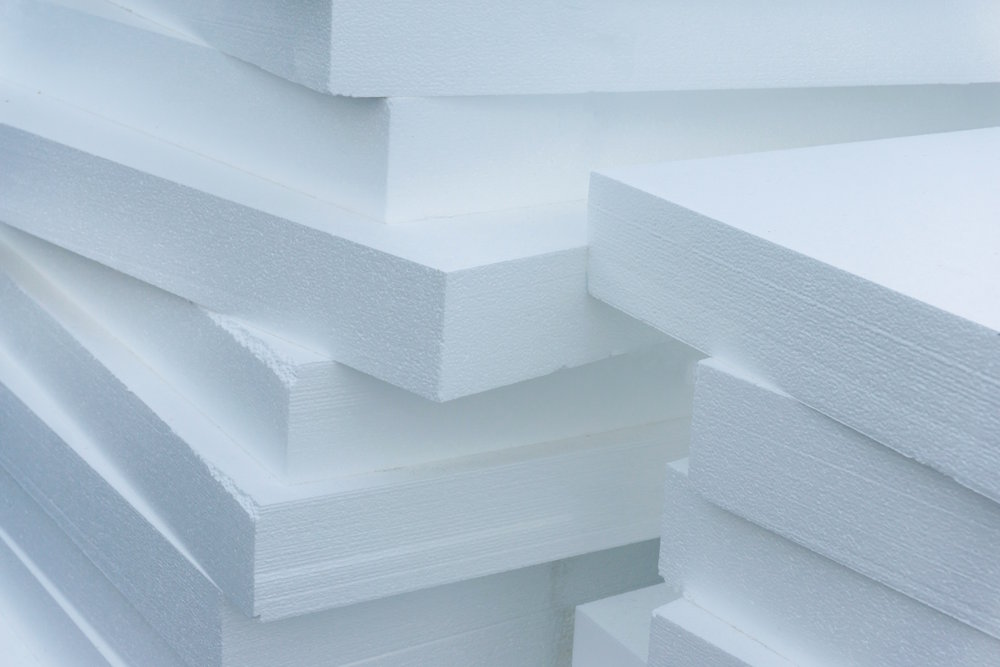
EPS is the workhorse of the CI market due to its versatility and compatibility with a wide range of exterior wall systems. It is typically the most cost-effective foam board insulation on a per-R-value basis. EPS runs approximately R-3.6 to R-4.2 per inch, depending on density, and is available in a variety of thicknesses, making it easy to tailor to code-required CI levels.
In terms of moisture performance, EPS has a relatively high vapor permeance compared to XPS, which means it allows moisture to pass through the wall assembly rather than trapping it. This characteristic is particularly valuable in mixed-humidity climates where inward vapor drive is a concern. Dryvit’s Outsulation® Plus MD is a great exterior insulation and finishing system incorporating EPS foam.
GPS (Graphite Polystyrene): Enhanced Thermal Performance in a Slim Profile
GPS is a modified form of EPS foam that incorporates graphite particles into the polystyrene matrix. The graphite reflects and absorbs radiant energy, reducing thermal conductivity and increasing R-value relative to standard EPS boards of the same thickness. GPS insulation runs approximately R-4.7 to R-5.0 per inch, which is a meaningful improvement over standard EPS, without increasing wall thickness. On projects where exterior profile constraints limit CI thickness, GPS foam, like that available in Outsulation® Plus MD System with Exterior Fire Blocking, allows architects to meet code R-values within a slimmer assembly.
With this benefit, GPS carries a cost premium over standard EPS, typically 15 to 25% higher. Its vapor permeance profile is similar to EPS, meaning it retains the drying potential to serve as a compatible CI with most wall systems.
XPS (Extruded Polystyrene): Moisture Resistance Above All Else
XPS is a closed-cell foam board with very low water absorption and low vapor permeance. These properties make XPS a reliable performer in high-moisture environments, including below-grade and ground-contact applications, situations where the CI layer may be exposed to prolonged moisture or where a vapor-retarding layer within the wall assembly is desirable.
XPS insulation ranges from R-4.5 to R-5.0 per inch, offering great thermal performance for the unique construction situations where it shines. Check out Outsulation® X for an EIFS cladding that includes XPS for its continuous insulation layer.
 Mineral Wool: Fire Resistance and Sustainability
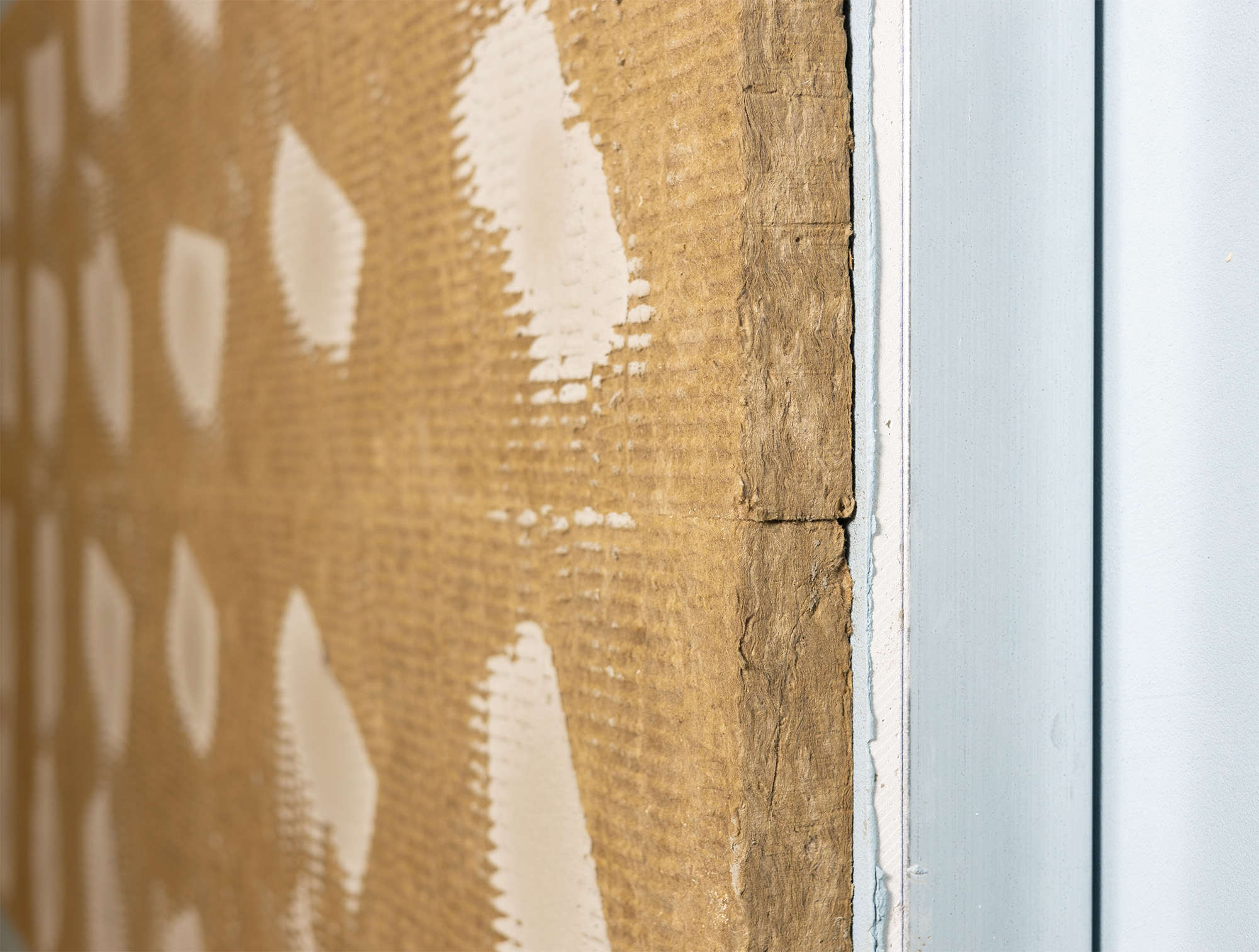
Mineral wool is manufactured from volcanic basalt rock or recycled slag and spun into fibrous batts or rigid boards. Unlike the previously mentioned foam-based CI, mineral wool is non-combustible and contributes measurable recycled content to a project. It is therefore commonly specified in mid- and high-rise commercial construction and in any assembly where building codes require non-combustible CI, including Type I and Type II construction under the IBC.
Because mineral wool insulation is highly vapor-permeable, it is compatible with wall systems designed for maximum drying potential, particularly in cold climates. At approximately R-4.0 to R-4.2 per inch for rigid mineral wool CI boards, it is heavier than foam-based CI and typically costs more per board-foot.
Insulation Comparison
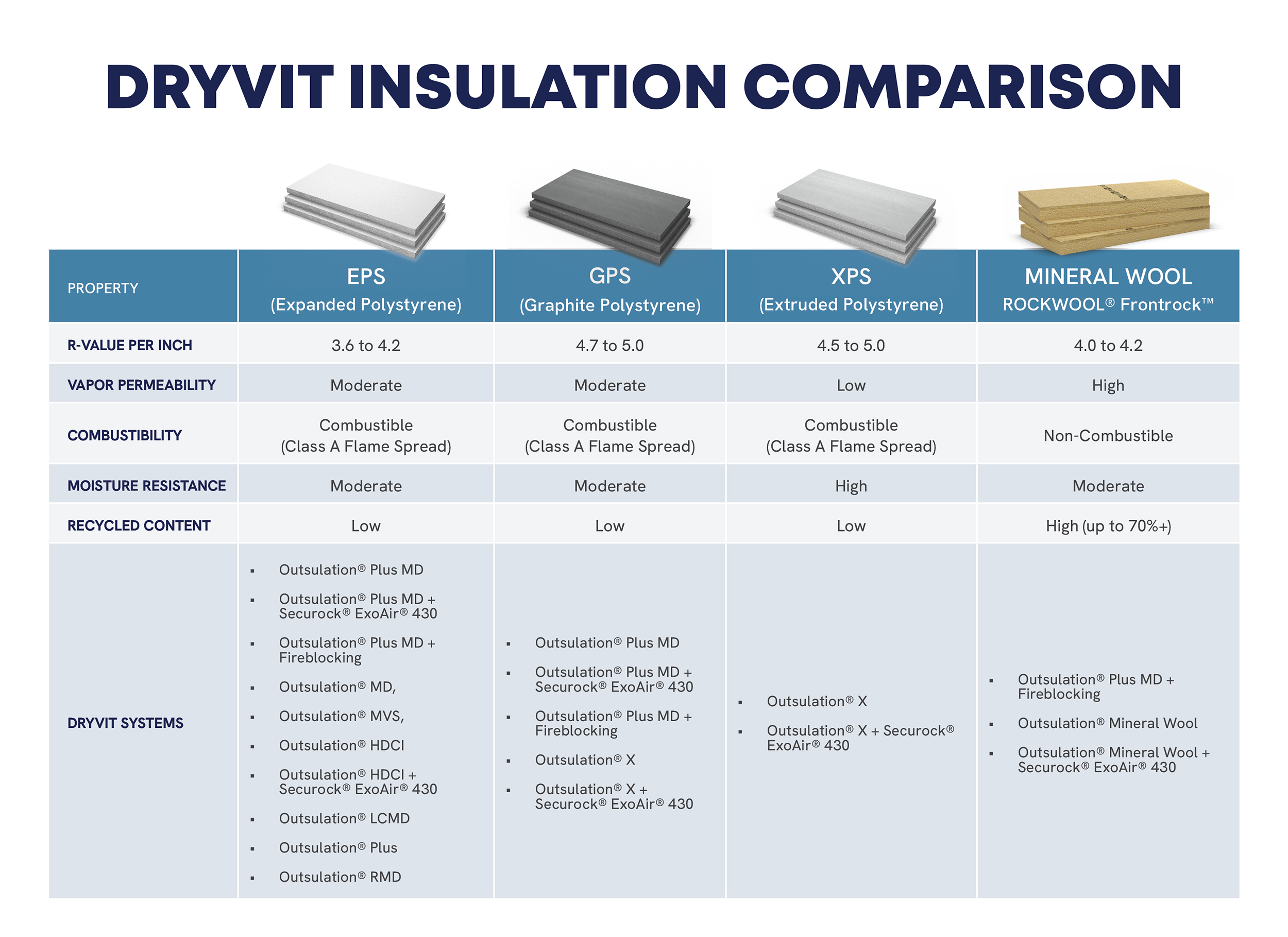
Here's a side-by-side comparison of continuous insulation technologies and their different properties.
Specifying the Right CI Material for Your Project
No single CI material is universally superior. The right specification depends on the intersection of building type, climate zone, code requirements and project priorities. Similarly, the best CI specification is one that accounts for the full wall assembly, not just the insulation layer in isolation. R-value is a starting point, not the complete picture. Moisture management, fire performance, code compliance and long-term durability all shape how a material performs over the life of the building.
For architects specifying EIFS assemblies, Dryvit’s Outsulation line has offerings with all of these insulation options that have been tested and validated as complete wall assemblies, including the CI, reinforced base coat and finish. This integrated approach reduces specification risk and provides a single source for wall system performance documentation, warranties and technical support.